

Ukrainians are increasingly investing in government bonds, with growth in their government bond portfolios already outpacing the increase in bank deposits. At the same time, the Ministry of Finance has been able to keep borrowing costs under control despite high interest rates.
Ukrainians Are Reshaping the Government Bond Market
Government bonds are gradually becoming an alternative to bank deposits. Currently, they account for around one-fifth of the combined value of these two instruments held by Ukrainian households.
During the first nine months of 2026, Ukrainians increased their investments in government bonds by approximately UAH 56 billion. This exceeded the growth in bank deposits over the same period.

The total increase in household government bond holdings since the beginning of the year reached approximately UAH 64 billion.
Meanwhile, the total outstanding volume of government bonds increased by just UAH 21 billion.
The difference reflects the fact that individuals are not only buying newly issued bonds but are also actively purchasing securities previously held by other investors, primarily banks. Retail investors have effectively offset the decline in banks’ portfolios, becoming one of the main sources of demand for government securities.
Why the Ministry of Finance Is Not Raising Rates
Growing demand for government bonds allows the Ministry of Finance to keep yields on new issues in check. Even amid tight monetary policy, the government is not rushing to raise rates on hryvnia-denominated borrowing. This signals that the Ministry is reluctant to take on debt at excessively high costs.
The government assesses borrowing costs based on expected inflation, currency depreciation and future budget revenues. The Ministry’s reluctance to raise rates may indicate that it expects inflation and the dollar exchange rate to rise more moderately than current yields on hryvnia bonds would suggest.
What Will Government Bond Yields Look Like in 2027?
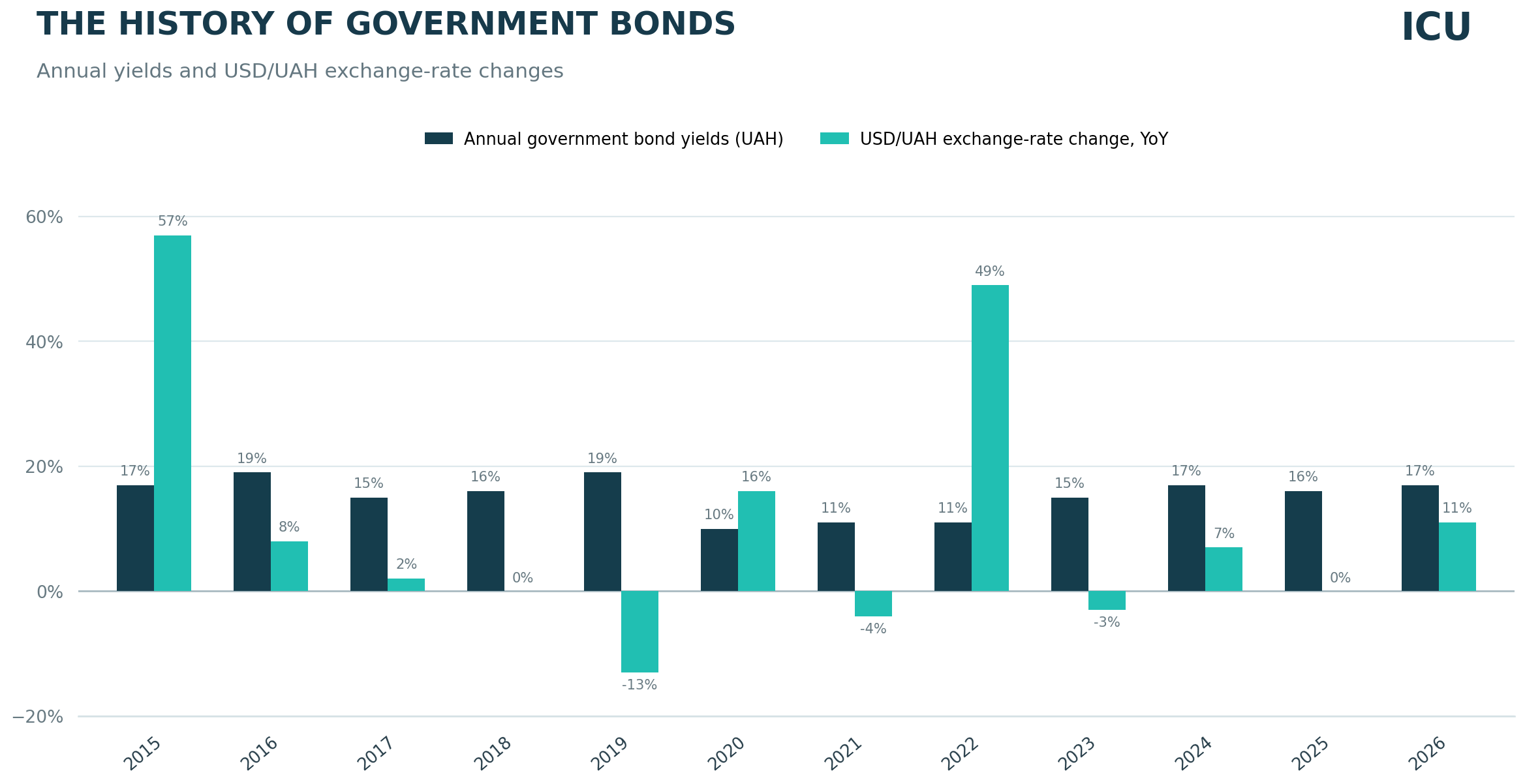
According to ICU estimates, investing in hryvnia-denominated government bonds over the past 12 years could have generated an average annual return of more than 6% in US dollar terms.
Excluding periods of major economic turmoil, including wartime shocks, this figure would have exceeded 10% annually.
ICU also expects hryvnia-denominated government bonds to remain attractive in 2027.
ICU’s forecast for 2027:
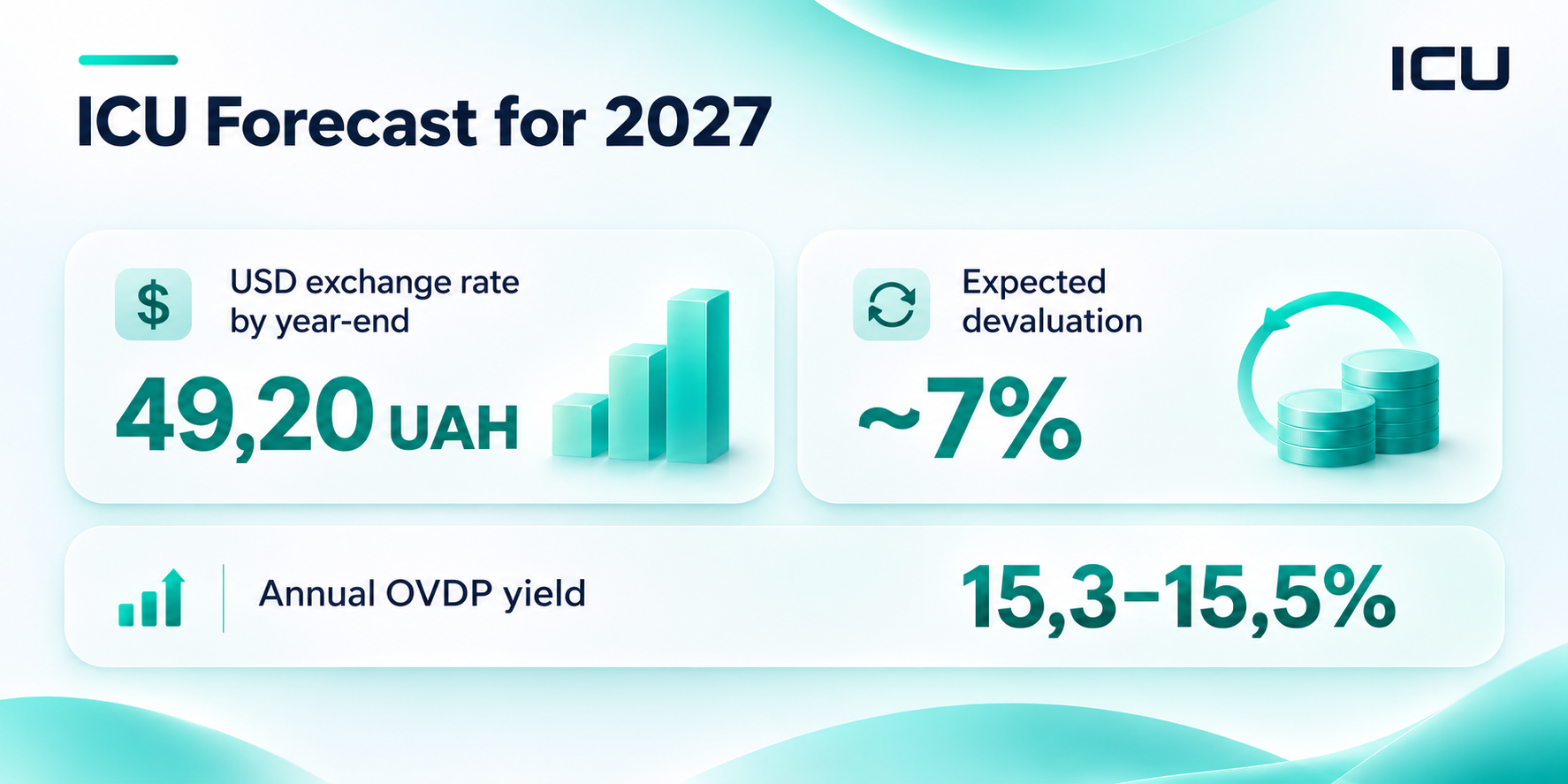
Under this scenario, nominal yields on hryvnia government bonds would exceed the expected depreciation of the hryvnia, creating the potential for positive returns in US dollar terms.
However, actual returns will depend on exchange rate movements, the purchase price of the bonds and the investment horizon.
What Ukraine’s Investment Market Is Missing
The main challenge facing Ukraine’s investment market is not a lack of money, but a limited choice of accessible and easy-to-understand financial instruments.
A significant share of household savings is held in non-financial assets, primarily real estate and land.
By comparison, in the United States, approximately two-thirds of household assets are held in financial instruments, including stocks, bonds and investment funds, according to the figures cited.
Ukraine’s investment product offering is also gradually expanding. Through investment funds, individuals can gain exposure to land, hotels, restaurants, energy projects, corporate bonds and other assets.
However, barriers remain: distrust of investment funds, difficulties in assessing risk, and limited understanding of how these instruments work.
Ukrainians’ Investments Reach a Record High
As Minfin previously reported, as of November 2, 2026, individual investors’ government bond holdings reached an all-time high of UAH 173.1 billion. In October alone, the portfolio grew by UAH 5.6 billion, or 3.3%.
According to ICU analysts, over the first ten months of 2026, individuals increased their government bond holdings by UAH 61 billion. This fully offset a nearly UAH 34 billion decline in banks’ investments.
Vladyslav Svystunov, Asset Manager at ICU Group